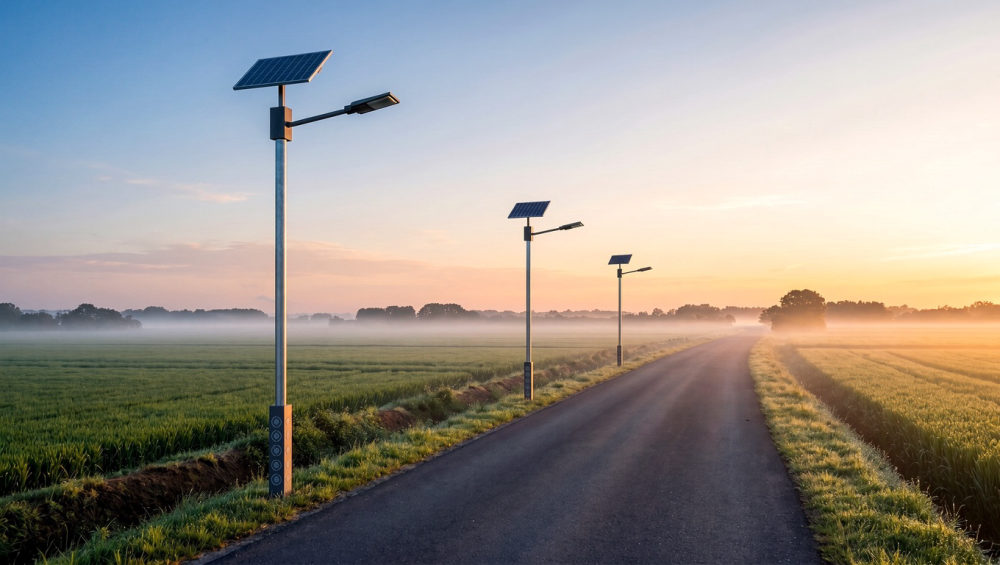
Solar street lighting has moved from pilot projects to standard specification across Africa, the Middle East, South Asia and Latin America. But the gap between a cheap solar light and one that still performs in year five is decided before the order is placed.
Lithium iron phosphate is now the default chemistry for serious projects. The failure mode we still see is under-sized batteries paired with optimistic backup claims. Ask for usable kWh, depth of discharge and assumed lighting hours per night, then multiply.
Dimming profiles matter more than peak lumens. Tenders increasingly specify 100% output for the first four hours, 60% until midnight and 30% until dawn. This cuts battery and panel size materially.
Remote monitoring through LoRa or NB-IoT lets an operator see which lights are offline instead of waiting for a complaint. On municipal projects with hundreds of poles, the monitoring cost is small against maintenance savings.
The pole is part of the product. Hot-dip galvanising, wall thickness, foundation drawing and wind-load calculation decide whether the installation survives the first storm season. One supplier for the complete kit keeps one party accountable.